Money as a decisive factor
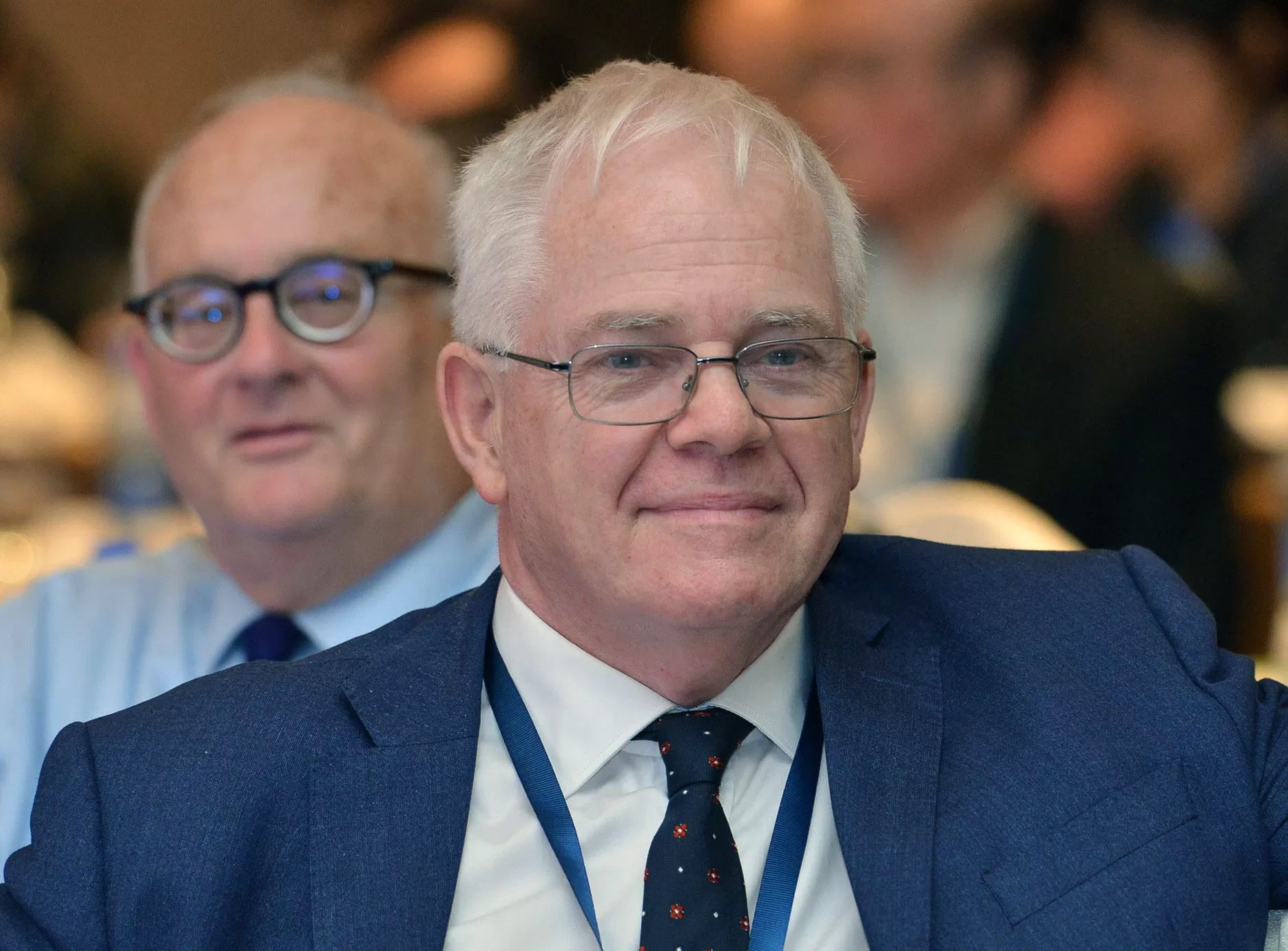
Where are the best minds going and why? Higher education researcher Simon Marginson from the University of Oxford reflects on the shifting map of academic excellence and what this means for international academic mobility. In an interview with Global Minds, he also explains how Germany could turn its intellectual strengths into global attraction.
Professor Marginson, you have been observing the global science system for many years – how have the powers shifted over the past 20 years?
A lot has changed. Until 2005, the U.S. science system was overwhelmingly dominant. In Europe, the EU framework programs were strengthening cross-border collaboration and, as a consequence, the research universities. Europe’s position in high-citation science began to improve. China was also rising fast because of a funding program launched in 1998, which aligned university ambitions with government strategy and massive investment. By 2005, you could already see rapid improvements. Singapore followed a similar path. Back then, few in the West believed East Asian science could rival Europe or the United States, although the signs were clear.
In what ways has academic mobility changed in the United States and Europe?
The United States used to attract talent from everywhere, including the Global South and Europe. Its private research universities were economically strong and were major magnets for global researchers for many decades. Now, it has become more closed. Immigration restrictions – under Trump especially – have sent negative signals. In the first ten months of last year alone, 8,000 international students had their visas revoked. Scientists talk about leaving the United States more often, and some actually do. Europe is comparatively open. The framework research programs have normed cross-country research teams and mobility is facilitated by the free movement within the EU. This is benefiting countries like Germany, the Netherlands, Switzerland, and Denmark.
And the UK?
Prior to Brexit, the UK was a magnet for European talent, but its position has now changed dramatically. Fewer EU citizens came after 2020, recruitment of master’s students (who now had to pay full international student fees) and doctoral students from EU countries declined sharply, and academic recruitment from the EU into teaching and research posts collapsed. Today the numbers of EU PhD students and postdocs have dropped to half of their previous levels. A more restrictive future migration policy could worsen this trend. Reform UK, currently leading in polls, wants to abolish permanent residency and require annual visa renewals and high salary thresholds to maintain residence. That would force many researchers to leave – creating an opportunity for Germany and other European countries to attract talent.
Has China’s rise resulted in more international researchers?
If you look at publication data, the impact of Chinese researchers is huge: About 45 percent of global scientific papers include at least one Chinese name, counting both Chinese nationals and Chinese-origin researchers abroad. That’s remarkable. Outbound mobility from China is now slowing, but given its population, the number studying abroad is still high. However, the majority of those who do doctoral training abroad now return.
China now facilitates recruitment of non-Chinese researchers through doctoral scholarships directed especially at Africa and other parts of the Global South. The leading Chinese universities also want to hire more non-Chinese faculty, but recruitment is difficult because of the language barrier. Chinese takes years to learn, which limits mobility. Recruiting overseas Chinese remains far easier.
Which other countries are currently on the rise?
Singapore invests its money in a very targeted fashion and is a stellar research performer on a smaller scale. Canada might be benefiting from the less welcoming image of the United States at present, but has cut back its recruitment of foreign students and this might affect its capacity to attract doctoral students and researchers. India is the slow burner. Its economy is far ahead of its university system, which remains fragmented and underfunded. Top Indian talent still moves abroad on a large scale. Eventually, however, its higher education and science systems will upgrade.
Internationalization expands the talent pool, often many times over. That is its most clear-cut value. And that alone increases the likelihood of excellence
What are the arguments in favor of internationalization – does it increase research quality?
The answer is yes and no; reality resists a firm overall generalization. Breakthroughs often come from close, local collaboration. When people work in the same institution, share culture and trust, and have strong shared knowledge, interdisciplinary ideas tend to flow more easily. Other breakthroughs, especially within the same field, benefit from international diversity. Working across cultures can challenge assumptions and spark new ideas.
Internationalization also expands the talent pool, often many times over. That is its most clear-cut value. And that alone increases the likelihood of excellence. The essential point is that science and research are universal by nature. If you lose international connectedness, you must ultimately stagnate. Even if breakthroughs are local, which is often the case in large research systems, staying globally engaged is crucial.
Does Germany have what it takes to become a magnet for international talent?
The Excellence Initiative couldn’t override the system’s egalitarian logic: Every university should be good, every doctorate strong. It’s a solid tradition – but underfunded. The federal system, which often results in a lowest common denominator logic, is an additional brake. A substantial increase in general funding would strengthen the universities as research institutions, both independently and as partners to the Max Planck Society. There’s no doubt that Germany has the talent and the organizational capacity to become a dynamic powerhouse. But without much more substantial funding, this potential will go untapped. Ultimately, on the global scale, it is money that drives talent flows, assuming migration rules allow mobility.
People are highly sensitive to salary signals – often more than they should be.
Which barriers do you see for international applicants in Germany?
Language is the obvious barrier. In particular, Anglophone academics rarely learn other languages. Another issue restricting competitiveness is the lack of flexibility in salaries. The United States can vary salaries widely to attract a star; Germany can’t. The decisive factor in winning top talent remains money – and how strategically it is used. UK institutions, for example, couldn’t attract Americans after Brexit in 2016, or after Trump started to attack the universities in 2025, because British salaries are only 60 percent of U.S. levels. People are highly sensitive to salary signals – often more than they should be.
Against this backdrop, it is all the more important that German universities underscore positives, such as the level of academic freedom in Germany and the permanent civil service status for professors, when competing for international talent.
What role do recruitment processes play?
You need a cosmopolitan front door: international members on search committees, visible merit-based procedures, and an environment that signals openness. Over time, an increasing number of international hires can shift the culture. Language requirements for teaching reinforce recruitment difficulties: If undergraduates have the right to be taught in German, hiring someone who can’t teach in German increases the workload for everyone else. That makes committees risk-averse.
What steps should Germany take to attract international talent?
I think there are three main topics that must be addressed. Firstly, Germany must increase its mobility support, for instance through housing allowances, relocation support, and integration assistance, including language courses and family support. This would encourage people enormously. Secondly, it needs to enable dual-career options. The United States excels in this regard. Offering meaningful opportunities for spouses makes relocation far easier for academic families. Thirdly, providing sufficient initial research funding is crucial. A starter grant gives new hires time to establish themselves and apply for major grants. Germany is highly attractive, intellectually and socially – but it doesn’t “shine” at first glance. Strong mobility support helps create that initial appeal.
Simon Marginson is Professor of Higher Education at the University of Oxford and was Director of the Centre for Global Higher Education at Oxford. His research focuses on global higher education, universities, knowledge systems, equity, and public policy, with particular attention to globalization and the public good role of universities.
