The next level
The U.S. academic system derives its strength from the international profile of its universities. Germany should take advantage of the current crisis in the United States to make its own academic system more international – and to attract talented young researchers in particular.
While strolling across the idyllic grounds of the Institute for Advanced Study (IAS) in Princeton one crisp fall morning, I passed the offices of scholars who had come here shortly after the institute was founded in 1930. They included Albert Einstein, John von Neumann, Hermann Weyl, and Kurt Gödel. These scholars were foreigners, most of them refugees from the Third Reich. And IAS continues to be highly international. Only three of the seven professors in the School of Historical Studies were born in the United States, and of the institute’s five Fields Medal winners, only one (Ed Witten) was born here.
Foreign professors also played a key role in my own education. Two of my mentors had escaped from Nazi Germany – the physicist Hans Bethe and the chemist Roald Hoffmann – and many of my teaching assistants came from China and India. And the bachelor’s, master’s, and doctoral students who were at university with me all had very different cultural and geographic backgrounds. This kind of international community has always been where the strength of U.S. scholarship lies and is what has made it a world-leading knowledge nation. When I came to Germany, I admit I was surprised at how few international academics there are in German faculties.
Sometimes I think German universities define internationality as bringing highly qualified Germans back to Germany. This may be a laudable goal, but it’s nowhere near enough.
It is high time German universities sought to raise their game and become much more international. The current crisis in U.S. academia was thoroughly documented last year, with many universities affected by the Trump government’s cuts. Stanford University, for example, announced in August 2025 that, because of Trump’s policy, it was laying off over 360 employees. Johns Hopkins University lost more than 800 million dollars in research funding from USAID. An additional 90 grants were terminated by other government agencies, costing the university a further 50 million dollars. And the Faculty of Arts and Sciences at Harvard University, which is valiantly fighting the Trump administration’s policy, announced an ongoing structural deficit of 350 million dollars, which is equivalent to around 20 percent of its annual operating budget. As a direct consequence of such deficits, a number of leading universities have either restricted the number of future appointments or imposed a complete recruitment freeze. This is regrettable and alarming.
But why shouldn’t Germany do everything in its power to attract scholars who would normally have gone to the United States, so they pursue careers at German universities instead?
The main focus should probably be on academics from India and China. Here, Germany should concentrate on postdocs and early-career researchers because well-known U.S. researchers are expensive and can be capricious. By contrast, younger researchers are more flexible and more mobile and, in many cases, may offer greater potential in the long run. In capitalist terms, they are a low-cost investment with a high return. In some disciplines, many of them are currently experiencing heavy funding cuts or even a complete withdrawal of funding in the United States. This would be a win-win-win situation – for research, for the young talent, and for the German universities – even if some representatives of German academia would rather not hear the message.
It would be a mistake to focus only on science and technology. Let us not forget that Erwin Panofsky, the famous art historian who escaped the Nazis, was a leading academic at IAS and his work continues to have a huge global influence to this day. In view of the many crises around the world, the humanities and social sciences can help us understand and engage deeply with the dilemmas we face. True internationality not only generates better ideas, innovations, and insights, but also contributes a multiplicity of perspectives. It is enriching on all levels.
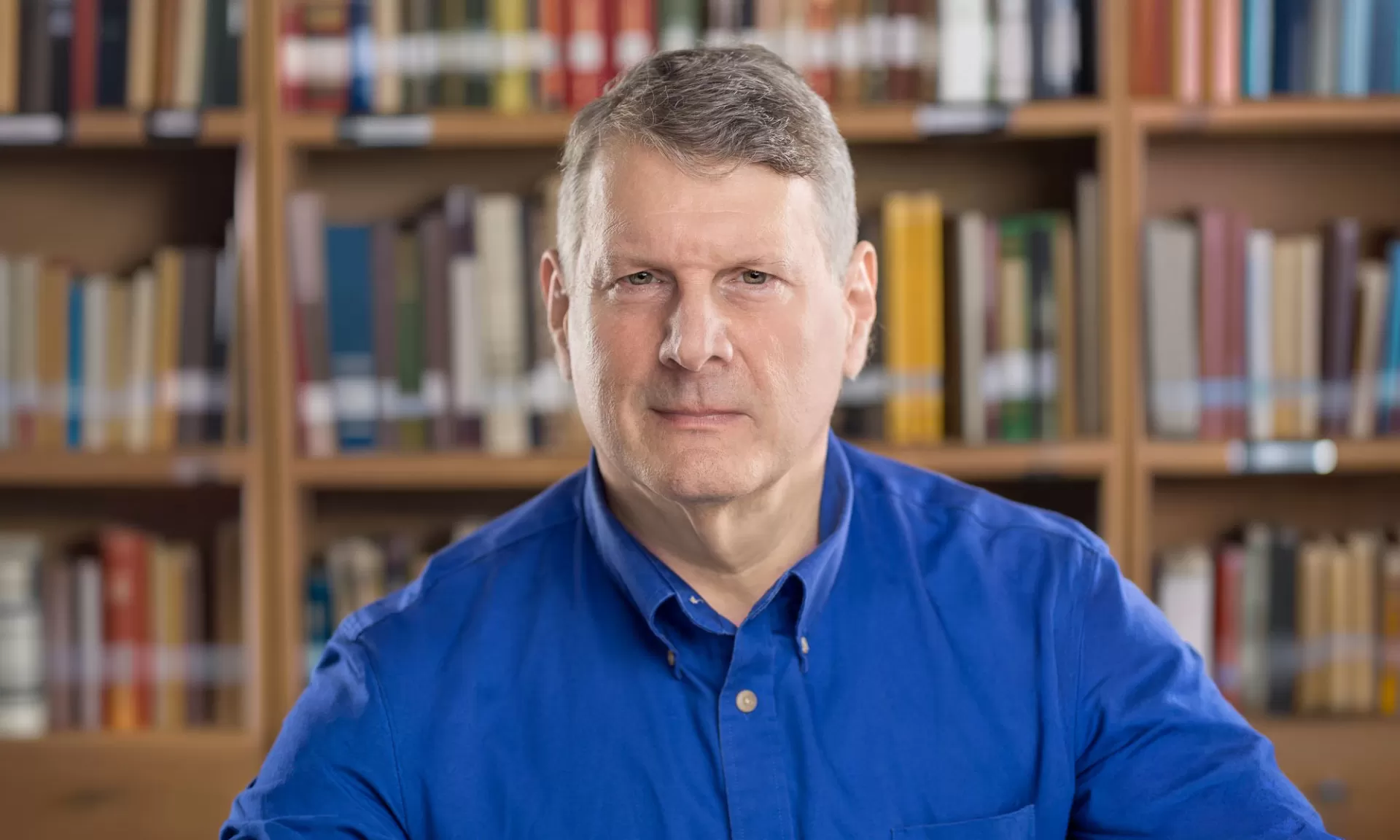
Myles W. Jackson is the Ernst and Elisabeth Albers-Schönberg Professor in the History of Science and Director of the School of Historical Studies at the Institute for Advanced Study, Princeton, USA.
