
Pooja Rani
Well-programmed software not only runs smoothly but is cheaper to maintain and energy-efficient. Computer scientist Pooja Rani tests software code and develops responsible programming methods.
When Pooja Rani discovered that the large language models (LLMs) she was studying were not very good at generating efficient software code, it was a sobering realization. “Today, everyone can use LLMs to program software, and even professional software developers routinely use AI to write code faster,” says Rani. “The problem is that this code is often bloated.” A single routine in a program that is used on a global scale can consume huge amounts of energy if it is simply adopted without being checked first.
We instructed the models to program the software to be lean and energy-efficient but that very rarely resulted in lower energy requirements.
Pooja Rani, who has been Professor of Computer Science at the University of Mannheim since April 2026, conducted a study to evaluate the code generated by LLMs. “We instructed the models to program the software to be lean and energy-efficient but that very rarely resulted in lower energy requirements,” says Rani. “This is a major problem because often no one checks whether the result actually complies with the instructions.” Even if the prompts specify that the code should be faster, more efficient, or more reliable, there is no guarantee that it will be. Rani and her co-authors therefore called for empirically grounded green coding guidelines and awareness training for software developers because “many of them aren’t even aware of the problem.”
We also need to ensure that software doesn’t glorify violence, stoke prejudice, or harm democracy.
Born in India, Rani could be described as a critical observer of software development. In carefully designed experiments, she investigates the core facets of sustainable software products. Energy consumption and carbon footprints are just one aspect, albeit an important one. As well as being efficient and environmentally sustainable, good software also needs to be reliable, capable of being maintained at a reasonable cost, and socially acceptable. “We also need to ensure that it doesn’t glorify violence, stoke prejudice, or harm democracy,” says Rani.
From an Indian village to the world of high technology
Rani herself has a remarkably steep career trajectory behind her. At 14, she still had no access to computers in the Indian village where she grew up. “We didn’t even have a landline at home,” she recalls. However, because she was one of the best in her class, the Indian school system enabled her to sign up for a three-year computer science course at a vocational school at the age of 15. “It was like a whole new world suddenly opened up for me. I was crazy about microprocessors,” says Rani. After completing her training, she immediately found a job. Among other things, she worked for Samsung in software quality assurance while studying computer science in Kolkata. Then she went to Rajasthan to do a master’s degree in software systems.
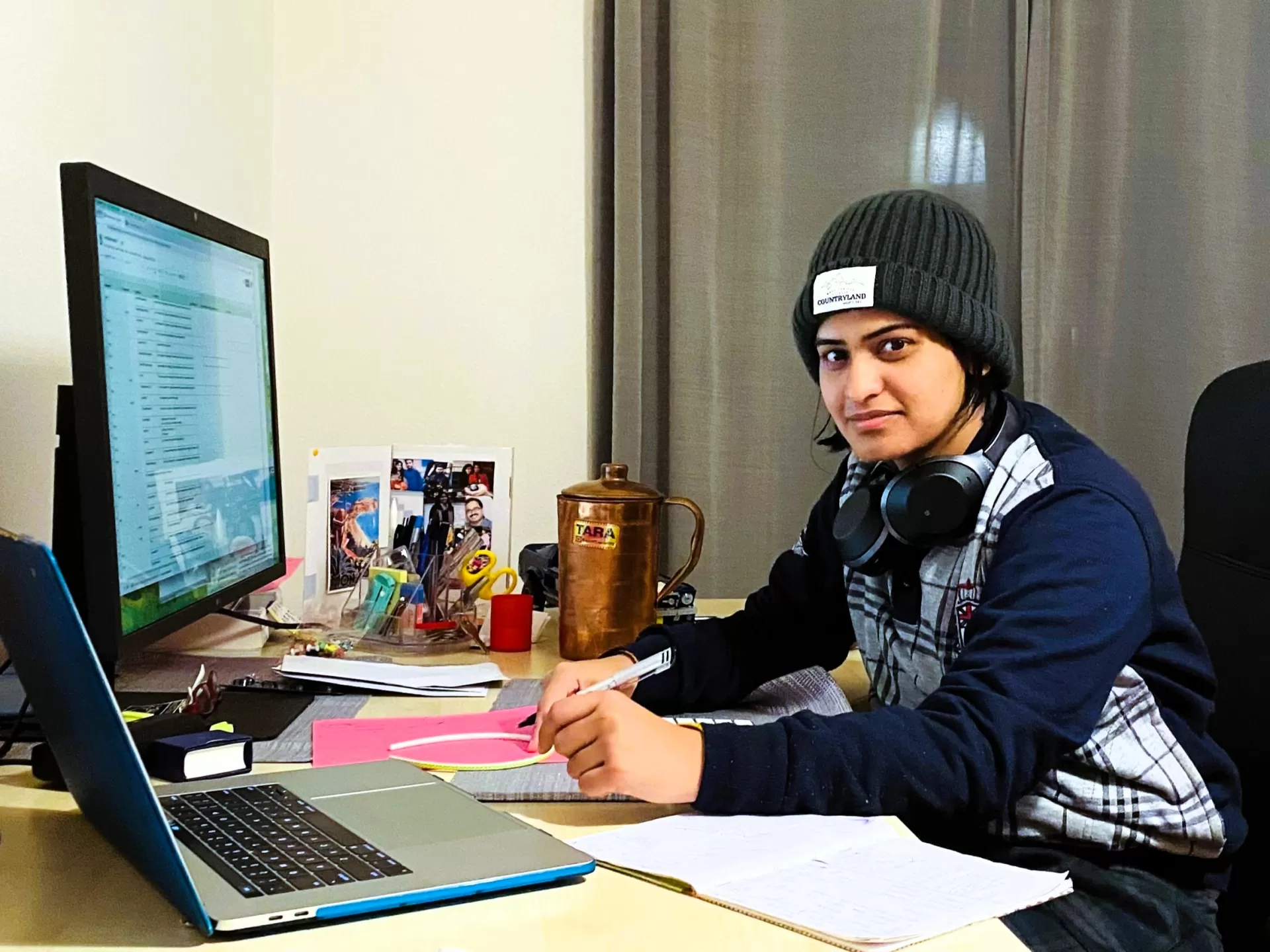
Thanks to her years of experience in industry and research, she succeeded in finding a doctoral position at the University of Bern, where she researched how software can be programmed in such a way that it can then be understood and maintained by a company’s software developers – without incurring unnecessary costs. In 2022 she moved to the University of Zurich for a postdoc position. This is where she first started focusing on the environmental impacts of software design. “During my PhD, I had read several fascinating papers on this topic, and I suddenly realized how much we programmers are living in a technical bubble,” says Rani. “I thought there is so much code, and no one is bothered about making it sustainable. I wanted to change that.”
A mission with an evidence base
Since then, Rani has been measuring the sustainability of software in all its dimensions. At the University of Mannheim, she hopes to do even more to help ensure that code produced by LLMs and AI can become more responsible. “I would like to create a reliable evidence base that developers can refer to in order to develop more sustainable software,” she says.
It’s very important to make programmers aware of sustainability.
Using empirical findings from her experiments, Rani is developing methods for improving the quality of code in environmental, technical, economic, and social terms. Even if AI is increasingly taking over the programming, humans are always at the center of the process. Because it is people who instruct the LLMs and, ideally, check the output. “So it’s very important to make programmers aware of sustainability,” says Rani, who sees disseminating her methods as part of her mission. From the summer semester of 2026, she will be offering courses in sustainable software development at the University of Mannheim.
The fact that Rani is continuing her research at the University of Mannheim is due in large part to the excellent conditions they were able to offer her, including the resources to set up her own lab. This is vital for making reliable, replicable measurements. For instance, if she wants to measure the energy consumption of a particular software routine, she needs strictly controlled hardware and software environments. Until now, Rani has made use of the facilities at Delft University of Technology. But with the resources attached to the new professorship, which is co-financed by Wübben Stiftung Wissenschaft, she will be able to set up Germany’s only lab for testing software sustainability.
The new lab at the University of Mannheim will produce the evidence Rani needs for her mission. For instance, it is still largely unclear how much energy a chatbot like ChatGPT actually uses to answer a user query. In a controlled experiment with a comparable chatbot, Rani revealed the estimated energy consumption. “Users were able to see for themselves how much energy their queries were consuming,” says Rani. In one study, 85 percent of users then decided to switch to an energy-saving mode. “That shows how important it is to make the environmental impacts of software visible – and it’s high time we did.”
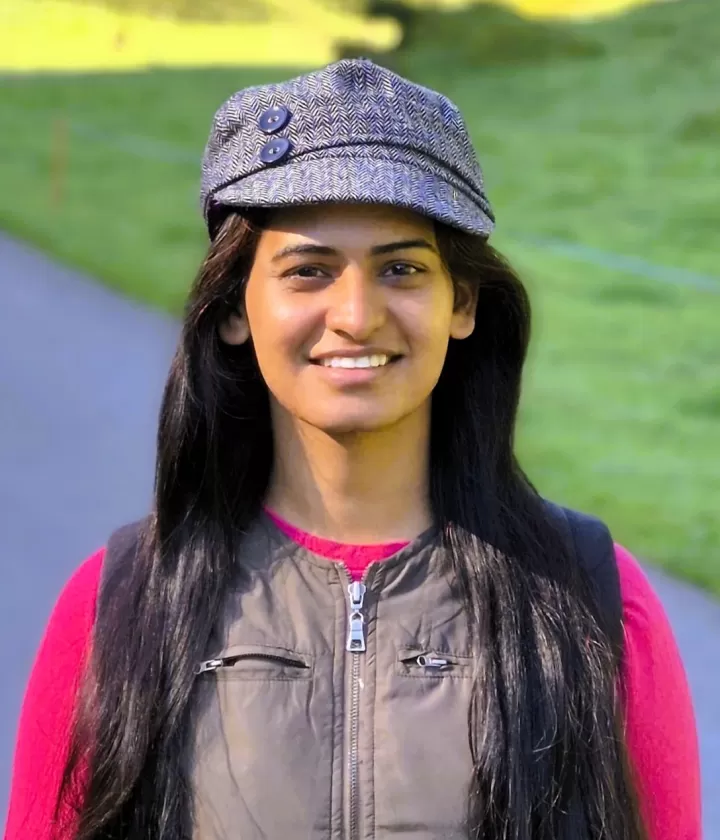
Pooja Rani transferred in April 2026 from the University of Zurich to the University of Mannheim, where she took up a tenured professorship in computer science. In Zurich, she worked as a senior researcher in the lab of Prof. Harald Gall and as a postdoc researcher in Prof. Alberto Bacchelli's lab. Prior to that, she completed a doctorate in computer software development at the University of Bern and worked for various software companies.