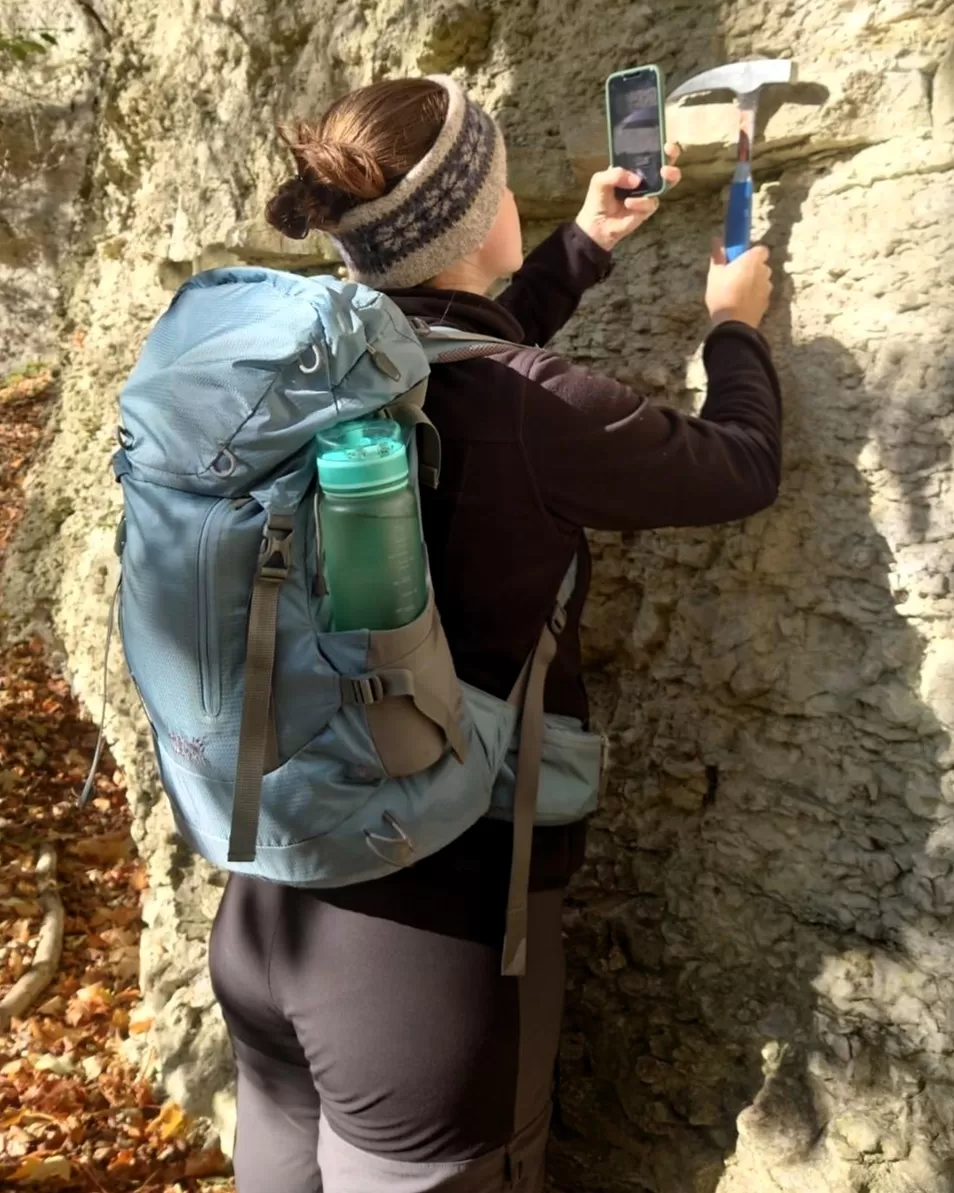
Joana Jodie Wagner
Ostracods open windows into the past: From their tiny calcareous shells, Joana Wagner reads how seas warmed, glaciers melted, and ecosystems changed. Her research on Arctic sediment cores helps us understand what once shaped the polar regions – and what threatens them today.
Ostracods are small crustaceans with a carapace that resembles a bivalve shell. They have been around since the Ordovician Period, in other words, for nearly half a billion years. Their calcified carapace stores chemical signals of past environmental changes that we can analyze using geochemical methods. For my bachelor’s dissertation, I researched ostracods in a sediment core taken from the Arctic Ocean north of Svalbard in Norway. The core is 4.62 meters long and its deepest layers date back 16,300 years, covering the entire period from the end of the last ice age to our current interglacial period.
It is only under the microscope that you can see the wonders held in a sediment sample like this.
A team of geologists has already used it to reconstruct the sediment origin, ocean flows, and water temperature to gain a better understanding of the dynamics of glacier melt at the end of the last ice age. Thanks to the ostracods, I was able to confirm these calculations. I took sediment samples from the core at ten-centimeter intervals and identified and analyzed the ostracod carapaces under the microscope. Species composition reveals a lot about environmental conditions at the time. Some species prefer colder water; others are more or less tolerant to low oxygen levels, or sensitive to ocean flows.
Our work is creating an important basis for future ecosystem and climate modeling.
I also analyzed the carapaces. The ratios of stable isotopes in them provide information about material exchange with the surrounding water and the temperature on the ocean floor. When oxygen isotope ratios are low, it means there was a massive influx of fresh water at that time – from melting glaciers.
The Svalbard region is currently warming four to six times faster than other areas. What is happening there now could happen in other parts of the Arctic in 20 to 40 years’ time. Reconstructing the past is key to gaining a better understanding of these developments. This means our work is creating an important basis for future ecosystem and climate modeling.
I have been drawn to the polar regions for as long as I can remember. As a child on skiing holidays – surrounded by snow and ice – I would read books about the animals of the Arctic and Antarctic. I wanted to help polar bears and penguins have a “good life”. That’s why I started out studying veterinary medicine. But working with individual “patients” was not enough – I wanted to understand the roots of the problems. This is how I came to interdisciplinary biogeosciences.
My favorite ostracod is currently Rabilimis mirabilis. Its name sounds like a spell, but if these ostracods are present in large numbers, it is an indication that a Heinrich event has occurred. This is when giant icebergs break off from glaciers.
Ostracods are still found everywhere to this day – in groundwater, in the smallest puddles, and even in wet grasslands. By studying them, we can see the extent to which human activity causes water pollution. The ostracod carapace is sensitive to pollutants and can, for example, be deformed by heavy metals. We can see this under the microscope.
For my master’s dissertation, I want to take a closer look at the human impact on the Norwegian fjords. Using ostracods, I hope to increase our understanding of how these regions are reacting to climate change and to anthropogenic influences, such as pollution and mechanical disturbance. In the long term, I would like to help establish ostracods more firmly as indicators of change in polar regions, so that such changes can be identified sooner and assessed on a sounder basis.
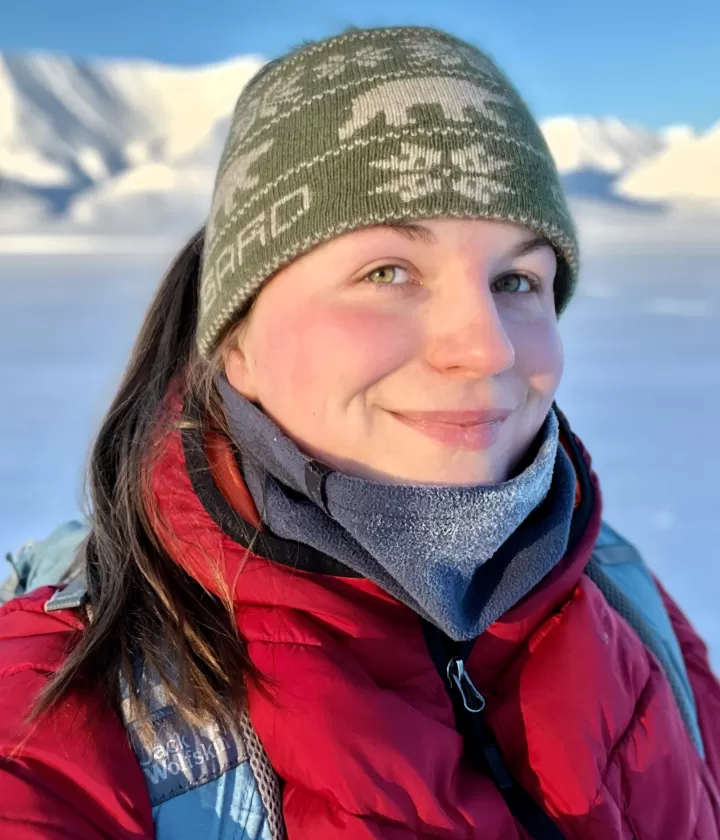
Joana Wagner studied veterinary medicine at the University of Leipzig, before moving to the University of Jena for studies in the biogeosciences. She is currently preparing for her master’s dissertation on Arctic and Antarctic microfossils in the paleontology research group there. Wagner is involved in the Association of Polar Early Career Scientists (APECS) and advocates for the importance of science communication on various university committees. She received a Wübben Stiftung Wissenschaft Student Grant in 2024/25.