
Workplace revolution
The rapid development of neurotechnology raises a number of issues. So how close are we to integrating brain-computer interfaces (BCIs) into our everyday working lives? A sandpit event in Aachen brought together experts from a number of different disciplines to discuss responsible use of BCIs.
Today’s science fiction can be tomorrow’s reality. Technology is advancing at such a rate that policymakers and society are often unable to grasp all the implications. How long will it be before we control our smart homes with our thoughts, and BCIs become an everyday feature of our working lives?
“Many people think it will take decades for that to happen,” says Alexander Kies (in the image above) of RWTH Aachen University, who conducts research into the impacts of neurotechnology. “But a company could equip its employees with neurotechnology headsets as early as next week.”
Compact electroencephalography (EEG) headsets that read electrical activity in the brain via electrodes can already reliably monitor whether employees are paying attention at work. This can be useful if people are operating large mining excavators or if the aim is to prevent burnout among health care workers. “Brain waves show whether someone is working in a concentrated manner or watching videos, whether they are agitated, stressed, or tired – and also whether they have Alzheimer’s,” says Kies. “The technology has both advantages and disadvantages, which need weighing up.”
A forum for open-minded discussion: Techno-optimism meets critical reflection
In October 2025, 19 experts came together in Aachen for the Big Brain Data sandpit event to reflect on responsible use of neurotechnologies. The sandpit format devised by Wübben Stiftung Wissenschaft brings together up to ten interdisciplinary teams each year to explore and identify new research questions. In Aachen, the participants included representatives from sociology, marketing, ethics, law, neurotechnology, and philosophy, as well as neurotechnology manufacturing firms, trade unions, and public authorities.
Without the sandpit, we would never have got all these perspectives in one room because business experts don’t normally go to the same conferences as philosophers and neurotechnologists.
“This broad disciplinary basis is precisely what you need for such a complex topic,” says Alexander Kies, who secured the funding for the event from Wübben Stiftung Wissenschaft. “Without the sandpit, we would never have got all these perspectives in one room because business experts don’t normally go to the same conferences as philosophers and neurotechnologists.” In Aachen, techno-optimism came face to face with critical reflection, setting the stage for an open-minded discussion about the scope and regulation of “disruptive” new technologies.
Among the organizations represented at the event was Wenco Mining Systems, a company that has been using EEG headsets for several years to monitor for signs of fatigue in drivers of 400-ton haul trucks. Neurable Inc. and EMOTIV, two neurotechnology manufacturers, also took part and contributed concrete practical experience to the discussion. “This broke down prejudices against the technology, and we were able to think constructively about responsible use of BCIs without wanting to over-regulate them,” says Kies.
From initial brainstorming to research project: The Wübben Foundation sandpits are where brave new research ideas are born. Click here for more information
The three-day sandpit event kicked off with a practical exercise, in which participants tried out modern EEG headsets before diving into intensive reflection sessions on the implications of the technology. The moderator made use of creative methods to encourage curiosity and sharing of expertise in rotating groups.
Key questions about the new technology were recorded in a Gallery of Questions, while a Gallery of Connections collected areas of overlap that could signpost avenues to answers. A Gallery of Hopes, Tensions, and Concerns allowed the participants to be open about their personal expectations and potential challenges.
The following two days of the sandpit covered a range of activities, from objectively mapping the complexities of this field to visionary thinking and fleshing out concrete ideas for future research questions. “In the end, we had several ideas for future research projects – the most important ones were to do with systematically identifying potential use cases for BCIs in the workplace, outlining both potential advantages and challenges,” says Anna Wexler, Professor of Medical Ethics and Health Policy at the University of Pennsylvania.
It combined technical, ethical, legal, and application-oriented perspectives, which showed that BCI innovations can only thrive if all these dimensions are taken into account.
For Emily Tetzlaff, Principal Scientist at Wenco Mining Systems, the group’s open-minded attitude was an important plus point: “It combined technical, ethical, legal, and application-oriented perspectives,” she says, “which showed that BCI innovations can only thrive if all these dimensions are taken into account.” In practice, she says, there is “huge potential” for further growth of BCIs in the workplace to support safety, well-being, and performance – particularly in high-risk, labor-intensive, mentally demanding environments like mining.
Anna Wexler contributed an ethical dimension to the discussion: “There are many ethical challenges associated with non-invasive BCIs, especially data protection, the validity of companies’ claims, and ethical marketing,” she says.
Tetzlaff sees responsible data use as the biggest challenge: “We need to ensure data protection, informed consent, transparency, clear purpose limitation, and protection against misuse,” she says. “But these challenges can be overcome, as Wenco has shown.”
A seedbed for major research projects
Sandpit organizer Alexander Kies is pleased with the results: “You can’t change the world in three days,” he says. “But we achieved our objective and developed some first ideas for practical research concepts.” He believes the networking opportunities offered by the sandpit were particularly valuable as a basis for future collaborations.
The participants are thinking big. They plan to submit applications for Horizon Europe funding and an ERC Starting Grant in 2026. “The focus will be on investigating the policy aspects of neurotechnology and on developing guidelines for employing neurotechnology ‘to do good’,” says Kies. Another research project will explore whether brain data deserves special protection.
Emily Tetzlaff from Wenco hopes the sandpit will also lead to research that shows how real use cases can be combined with strong ethical safeguards – “particularly in areas where BCIs can make meaningful improvements to safety, health, or accessibility,” she says. Her company is open to collaboration.
For businesses, it is not yet clear where the boundaries lie in the use of brain-computer interfaces and neurodata in the workplace. We hope that our deliberations will help define the parameters of responsible use.
For Laura Bernáez Timón from the Centre for Future Generations, a Brussels-based think tank focused on technological change, an important insight from the sandpit was the need for a strong European neurotechnology and BCI network to enable a holistic debate and public involvement (see interview).
“For businesses, it is not yet clear where the boundaries lie in the use of brain-computer interfaces and neurodata in the workplace,” says Kies. “We hope that our deliberations will help define the parameters of responsible use.”
In conversation with: Laura Bernáez Timón
Where do you see the potential and challenges of brain-computer interfaces (BCIs)?
BCIs offer the opportunity to create new forms of interaction with technology beyond established medical applications. They can deepen our understanding of the brain and facilitate access to data about brain health. The challenges lie in how these systems change our relationships with people, machines, and information, especially as they overlap with artificial intelligence and enable forms of hyper-personalization. There is also growing concern that brain signals could be misused by consumer devices. It is still unclear how easily malicious actors could extract and use such data to manipulate people in vulnerable moments – for example, when they are stressed or tired – with misinformation or advertising. Questions about access and power also remain unresolved, such as how these technologies could be used in the workplace.
What was the most important insight from the sandpit?
A key finding is that Europe needs a more networked and coordinated system around BCIs and neurotechnology. The field is highly interdisciplinary, but many people work in isolation rather than together. The sandpit showed how productive discussions can be when different perspectives come together. A unified European platform could promote this and improve communication with the public about the opportunities, risks, and significance of BCIs. At the same time, it would ensure that different points of view are taken into account. Another important point in the sandpit was the debate about what makes brain data truly unique and where the limits of measuring brain data lie for consumers. Hearing different, evidence-based approaches was helpful, as such questions are essential for designing credible governance frameworks.
What impact do you hope the sandpit will have?
The sandpit has shown how valuable it is to bring different stakeholders together around one table. Such formats create space for critical discussions and help to shape a more responsible path for BCIs before technologies are rolled out across the board. Following the UNESCO Recommendation on the Ethics of Neurotechnology in 2025, Europe must now push ahead with its own debate. A format such as the sandpit can help clarify which technologies the EU should promote and under what conditions.
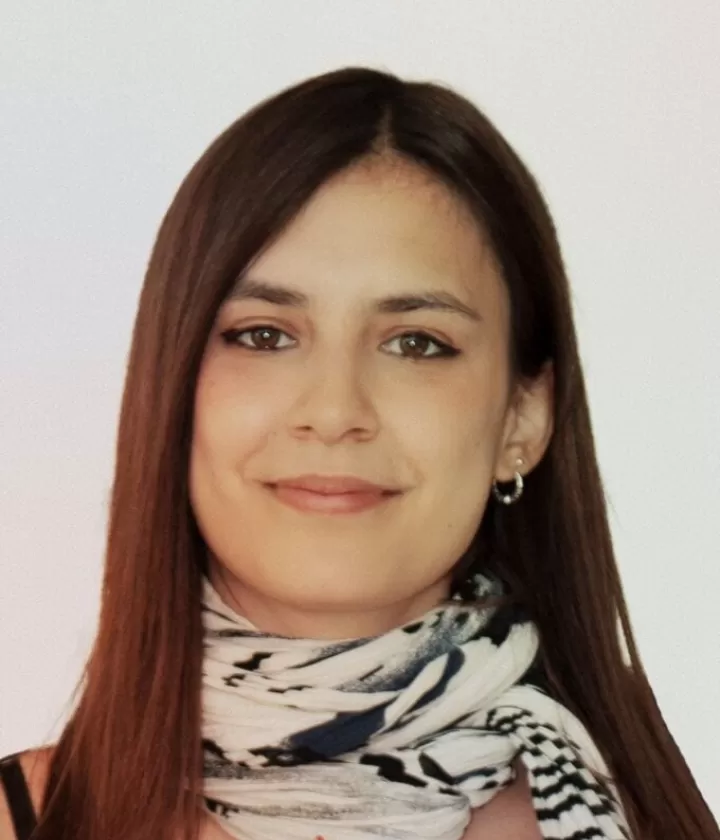
Laura Bernáez Timón is a neuroscientist and represented the Centre for Future Generations, an independent think-and-do tank in Brussels, which was founded to help decision-makers anticipate and manage rapid technological change, and ensure that new technologies such as brain-computer interfaces are developed in a way that benefits society.
Contact
Dr. Alexander Kies, Service and Technology Marketing (STM)
TIME Research Area, School of Business and Economics
RWTH Aachen University, kies@time.rwth-aachen.de