Modern care models in pediatric oncology
When children get cancer, it hits their families hard. Everyday life becomes an ordeal and many support services stop when the child leaves hospital. At a sandpit event organized by Wübben Stiftung Wissenschaft, doctors, technical experts, and relatives of young patients investigated digital solutions to close the gap between hospital bed and bedroom.
The topic under discussion was how a smart home-based monitoring system with a modular platform for communication between families and healthcare professionals can help shift care out of the hospital setting, as far as possible, and into the home. At the start of the three-day exchange, a father talked about his son who has leukemia. About the fact that his cancer didn’t respond to treatment, that he had to have a stem cell transplant, and how all this nearly broke the family. “Happily, the child has recovered and is being monitored, but the family now has to find its way back to normality,” says pediatric oncologist Dominik Schöndorf, who looks after the boy at Saarland University Medical Center. The parents still regularly make the long journey to the hospital for aftercare, and also attend additional appointments when new symptoms emerge.
We want to break down the traditional barriers between hospital treatment and home-based treatment so that we can provide better support to families through care services and technical solutions.
In May 2025, 25 specialists and relatives of patients came together in Saarbrücken to spend three days discussing possible ways of alleviating the difficult patient journey that families have to embark on following a child’s cancer diagnosis. “We want to break down the traditional barriers between hospital treatment and home-based treatment so that we can provide better support to families through care services and technical solutions,” says Schöndorf.
This broad range of participants is the complete opposite of what you find at medical conferences, where topics are explored in great depth but only from a medical point of view.
The platform for the discussion was provided by one of Wübben Stiftung Wissenschaft’s sandpit workshops, which invite researchers to explore new questions in interdisciplinary teams and develop concrete project ideas. “The sandpit helped us to step out of our usual silo mentality and listen to one another,” says Schöndorf, who submitted the sandpit proposal. The participants included experts from pediatric oncology, psychology, artificial intelligence, law, sensor technology, and software development. Patients and their relatives were explicitly placed at the center of the process as experts who know a lot about the disease. “This broad range of participants is the complete opposite of what you find at medical conferences, where topics are explored in great depth but only from a medical point of view.”
Across Germany, around 2,250 children and adolescents under the age of 18 are diagnosed with cancer each year. The most common types are forms of acute leukemia and brain tumors, followed by lymphoma. The cure rates are over 80 percent, which is much higher than for adults. But the treatments are still grueling, both physically and mentally. In the case of acute leukemia, for instance, patients are given six to eight months of intensive chemotherapy, followed by maintenance therapy with regular medication until two years following diagnosis. And that’s if everything goes well.
Saarland University Medical Center offers a comprehensive care package to patients that starts from the day they receive their diagnosis. A psychologist looks after the entire family, and a social worker helps them cope with everyday life. To prevent the young people falling behind with their schoolwork, a teacher provides bedside lessons, while occupational and music therapists keep the patients physically and mentally active. However, once patients are discharged, many of these services are no longer available to them or only at a higher cost, especially if the families live a long distance from the hospital.
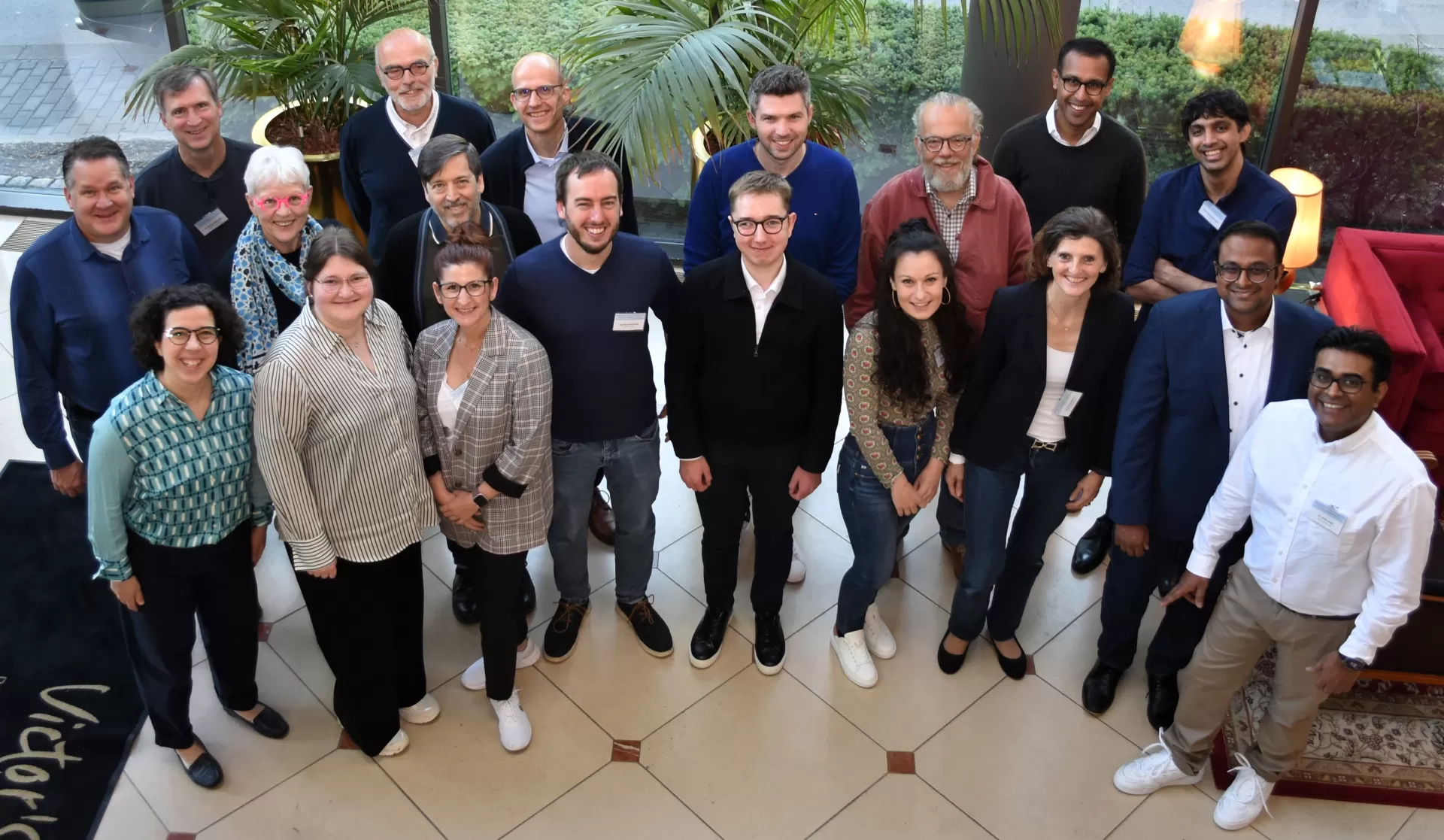
Twenty participants gathered in Saarbrücken to explore ways to improve home care for children with cancer
Comprehensive care and focus on the whole patient journey
The question at the center of the sandpit discussion was therefore how to improve the focus on the entire patient journey – from diagnosis to aftercare. For instance, when and how in-patient care can be replaced by less stressful treatment at home. In the case of acute leukemia, for example, children repeatedly have to attend the hospital on four consecutive days for a single injection each time, although each journey places a physical and mental strain on them. “We worked together to identify which parts of the treatment we can safely offer at home to relieve the burden on families,” says Schöndorf.
Many children and their parents are exhausted and depressed following the intensive treatment phase, so we want to help them get through this or, better still, take preventive action.
A key part of the patient journey is the period following treatment, when the family has to find its way back into normal life while facing an uncertain future. “Many children and their parents are exhausted and depressed following the intensive treatment phase, so we want to help them get through this or, better still, take preventive action,” says Schöndorf. Targeted support is particularly invaluable during this time. The sandpit gave participants the freedom to work with families on developing approaches to close the support gaps. In design-thinking exercises, they outlined their boldest ideas, before discussing them in small groups. “Then we decided together which of them we wanted to pursue,” says Schöndorf.
Digital solutions for convenient and efficient support
Adaptive digital solutions proved particularly promising – not least because of the shortage of resources and personnel in the healthcare system. Since the initial exchange of ideas, a core group from the sandpit has met several times to focus on advancing the top suggestions.
For instance, a smart home-based system could monitor the heart rate, oxygen saturation level, and body temperature of newly discharged children and e.g. detect infections at an early stage. Alongside home-based monitoring, a digital platform could also help send photos and videos to doctors to deal with complications efficiently – and avoid hospital visits wherever possible. “A mobile care team could then respond as and when necessary, and visit the family to treat the child,” says Schöndorf.
Several ideas led to the decision to develop a digital platform combining a number of different modules. The platform could be designed as an app that reminds families when it’s time to take medication, to facilitate communication with doctors, and to transfer important home-based monitoring data. With the help of AI, it could also collate hospital information in an easy-to-understand digital patient record.
Ideally, we will be able to help families reduce the number of hospital treatments for their children and enable accompanying research, particularly in the area of quality of life.
Moreover, the app could significantly improve physiotherapy rehabilitation. A small, animated animal on a tablet could motivate the child to be physically active between physio appointments, and suggest personalized exercises. Video analysis could also be used to check whether the child was doing the exercises correctly.
There are plans for a start-up company to develop the modular app as a licensed medical product, with scientific advice from Saarland University Medical Center (see interview). “We would like all pediatric oncologists and their patients in Germany to make active use of the platform and help with its design,” says Schöndorf. “Ideally, we will be able to help families reduce the number of hospital treatments for their children and enable accompanying research, particularly in the area of quality of life.”
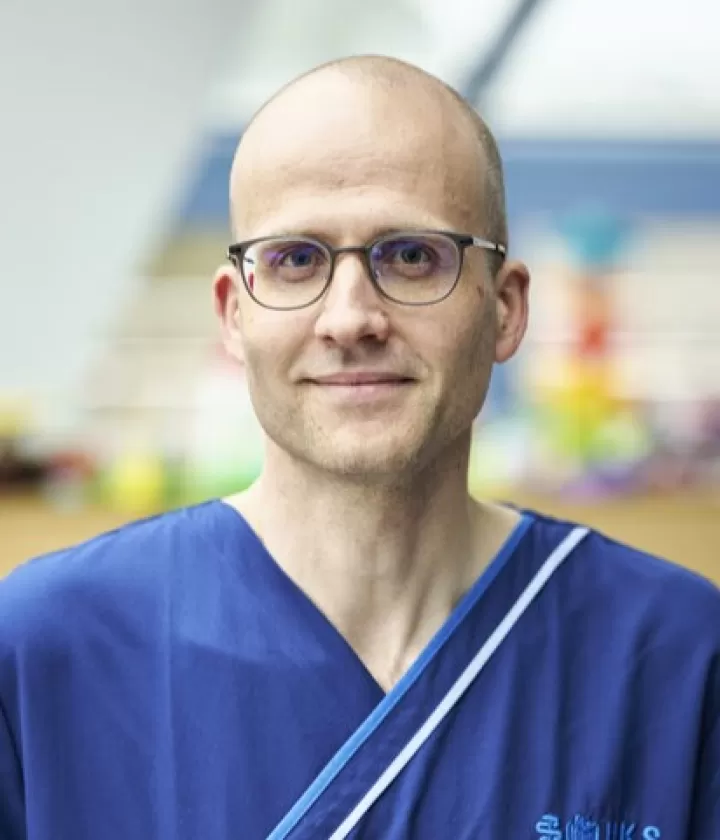
Dominik Schöndorf is a senior physician at Saarland University Medical Center and a board-certified specialist in pediatrics and adolescent medicine, with a focus on pediatric hematology and oncology, pediatric and adolescent pulmonology, and allergology. He has a particular interest in the integration of AI into both clinical and non-clinical care -such as in the home setting- as well as its application in diagnostic and therapeutic processes, with a special focus on risk management and the training of all staff members.
From initial brainstorming to research project: The Wübben Foundation sandpits are where brave new research ideas are born. Click here for more information
In conversation with: Ankit Singh
An app as a reliable companion for children with cancer
As a software developer and digital health expert, you contributed an app-development perspective to the sandpit on pediatric oncology. How did you feel the perspectives of the other participants enriched the discussion?
I found the perspective of the parents of a child with cancer particularly valuable. The fact that they were there enabled us to understand at first hand what cancer means for the whole family from an emotional, social, and practical point of view. It injected a connection to real life, a degree of emotion, and a sense of responsibility that an academic discussion on its own could never have achieved. The discussion was also enriched by experts from numerous different fields. In the health service in particular, interdisciplinary approaches are essential because the challenges are rarely of a purely technical, clinical, or organizational nature. They sit between medicine, psychology, rehabilitation, ethics, family life, system design, and practical implementation. When all these perspectives are brought together, the discussion becomes richer, more evidence-based, and more grounded in reality. The sandpit also showed me how valuable it is to create a space where experts come up against other experts in a constructive setting, where uncertainty is permitted, and where the germs of ideas are allowed to grow through dialogue, instead of being assessed prematurely.
One result of the discussion is that you are now working with other sandpit participants on an app to support children with cancer and their families. What will this app be able to do?
Families who are confronted with cancer often bear a heavy burden. For many of them, the hardest moments are not just the hospital visits, but the time afterwards, when they are back home with their children and trying to cope with the uncertainties they face. Our app, called GenieCARE.AI, is intended to provide ongoing, practical, humane support for children and adolescents with cancer and their families – from diagnosis and prehabilitation to treatment, recovery, and day-to-day care. The idea is that it will help families by providing easy-to-understand, situation-based guidance so that they can monitor symptoms and support their children’s well-being. With this app we are building a bridge between hospital care and home life, supporting rehabilitation, and encouraging physical activity. GenieCARE is a deep tech solution capable of providing this support in a dynamic, personalized form at every phase of the patient’s cancer journey. Our goal is for families to see the app as a trusted companion that offers guidance and helps them feel less alone on this extremely difficult journey. For doctors and care teams, GenieCARE can also provide information about the patient’s state of health and help ensure that clinical recommendations are more closely linked to the patient’s real life.
Why are technical solutions like this particularly well suited to closing gaps in the health service?
In the health service, information often goes astray between the many different professionals and institutions. As a result, patients and their families have to take on the bulk of the coordination work themselves. Good technical solutions can help to close these gaps. They can support the flow of information, improve transparency, personalize care, facilitate better aftercare, and establish a connection between what happens in hospital and what happens at home. With GenieCARE.AI, this support starts at the moment of diagnosis and includes prehabilitation, so that families have a reliable companion at their side right from the start, and not just during or after their hospital stay. Thanks to the deep tech underlying the platform, this support can be adapted dynamically to each patient’s individual situation. The sandpit showed me how important it is to incorporate the perspective of patients and their families. They know best what they find overwhelming day to day, what frightens them, or is just difficult to cope with – and what kind of support would actually help them. We are developing GenieCARE.AI in close dialogue with users and other stakeholders, including care teams, oncologists, nurses, and clinical coordinators, so that every stage of the development process is shaped by real needs. If these kinds of practical experiences are ignored, there is a risk that even technically advanced solutions won’t work in reality. This is particularly true when dealing with diseases like cancer, where the emotional, social, and practical pressures are huge. For this reason, I am convinced that we should always develop digital health solutions with people and not simply for them.
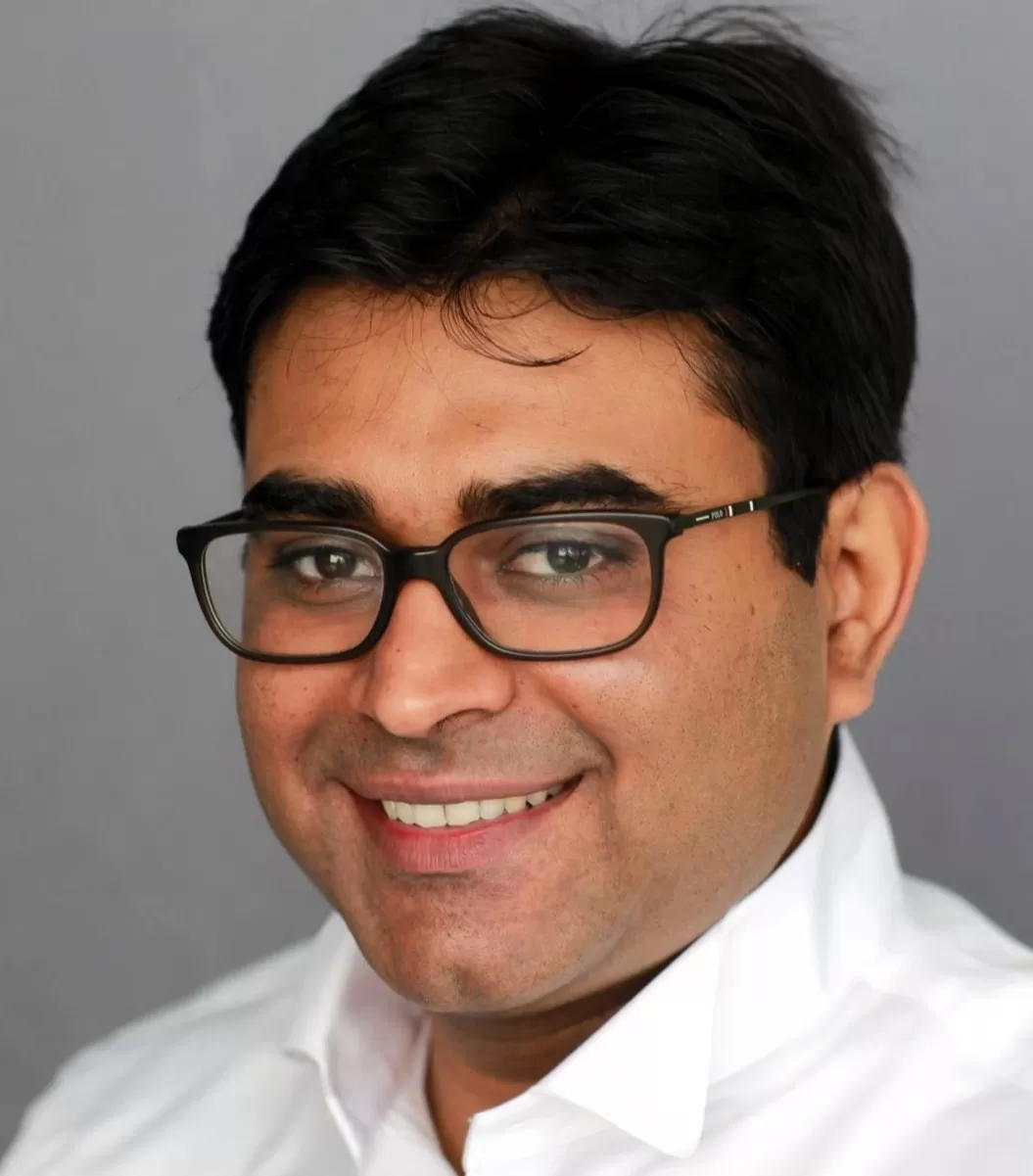
Ankit Singh is a multidisciplinary medtech and digital health expert with experience in software development, product management, and digital innovation. He is currently serving as Head of Smart Connectivity Solutions Operations at Siemens Healthineers AG and, in parallel, building his startup, which is developing GenieCARE.AI, a pediatric-first digital cancer companion designed to support childhood, adolescent, and young adult (CAYA) cancer patients, before being rolled out to adult oncology care.