Big brain data and the future of work
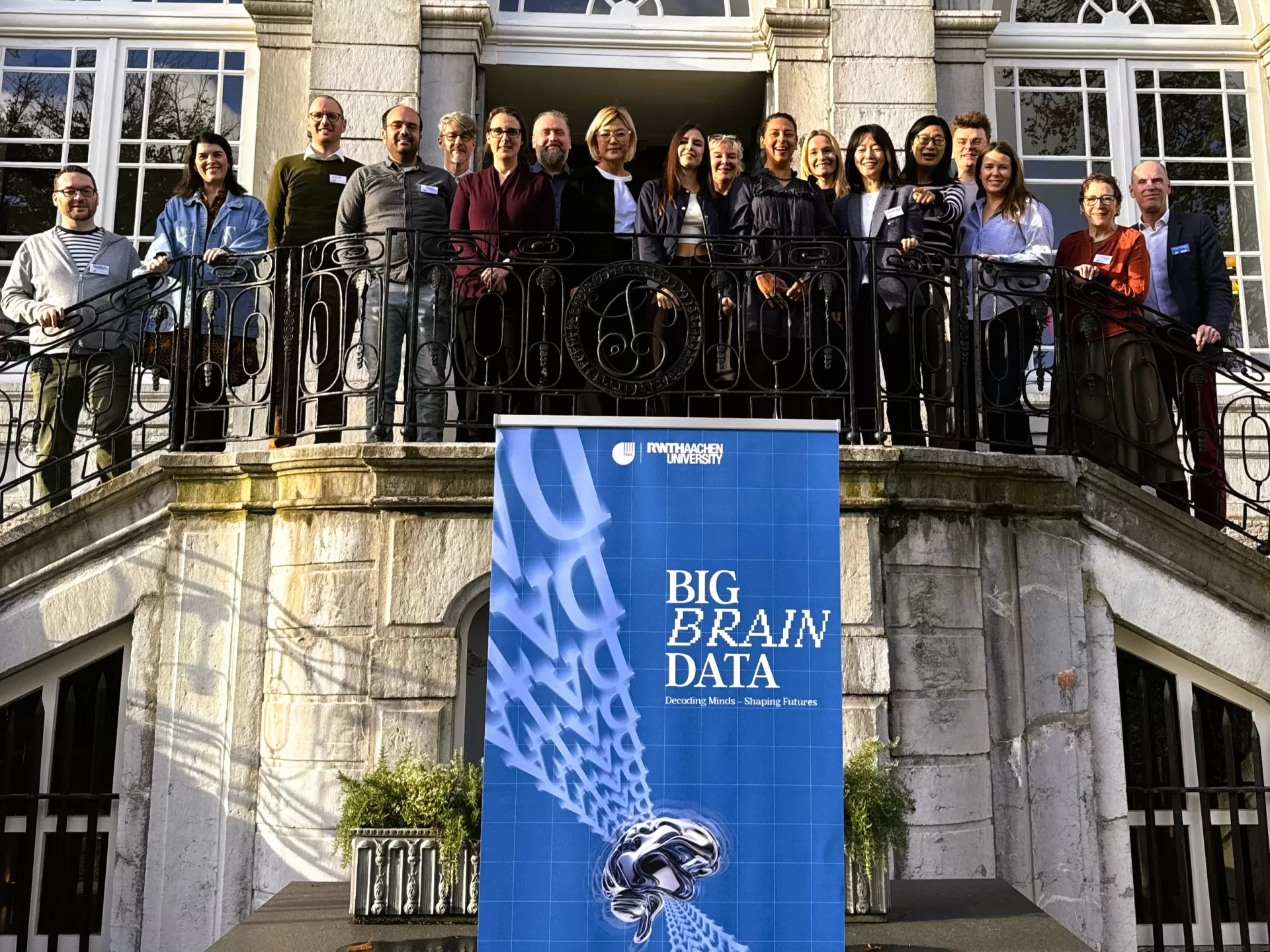
From October 22 to 24, 2025, fifteen international experts met in Vaals on the German-Dutch border to discuss how neurotechnological innovations can be used responsibly in the workplace.
The workshop produced two project ideas that will explore the use of brain–computer interfaces (BCIs) from both ethical and user centered angles. The meeting was initiated by technology marketing researcher Alexander Kies of RWTH Aachen University and funded by the Wübben Stiftung Wissenschaft through its Sandpit programme.
BCIs record brain activity to assess cognitive and emotional states and are becoming increasingly important for monitoring workplace safety. The group therefore focused on standardisation, regulatory demands, and the impact of BCI tools in real work environments. The interactive format helped bring together a wide range of perspectives. Participants from Belgium, Spain, the United Kingdom, the United States, and Canada contributed expertise in economics, sociology, bioscience and technology studies, and neuroscience. Practical insights from experts in industry, policy consulting, and think tanks were especially valuable.
Two project teams will carry the work forward. “The Good Life and Beyond with Neurotech” will examine the ethical implications of the technology. “Designing a User Centered Pathway for Current and Future Users of BCI Tools” will focus on market adoption and user needs for broader implementation.
A Sandpit is an idea workshop that brings together researchers and practitioners from different fields. The foundation has already funded three such workshops, with more planned. Further information about the funding programme can be found here.
Contact
Dr. Alexander Kies, Service and Technology Marketing (STM)
TIME Research Area, School of Business and Economics
RWTH Aachen University, kies@time.rwth-aachen.de