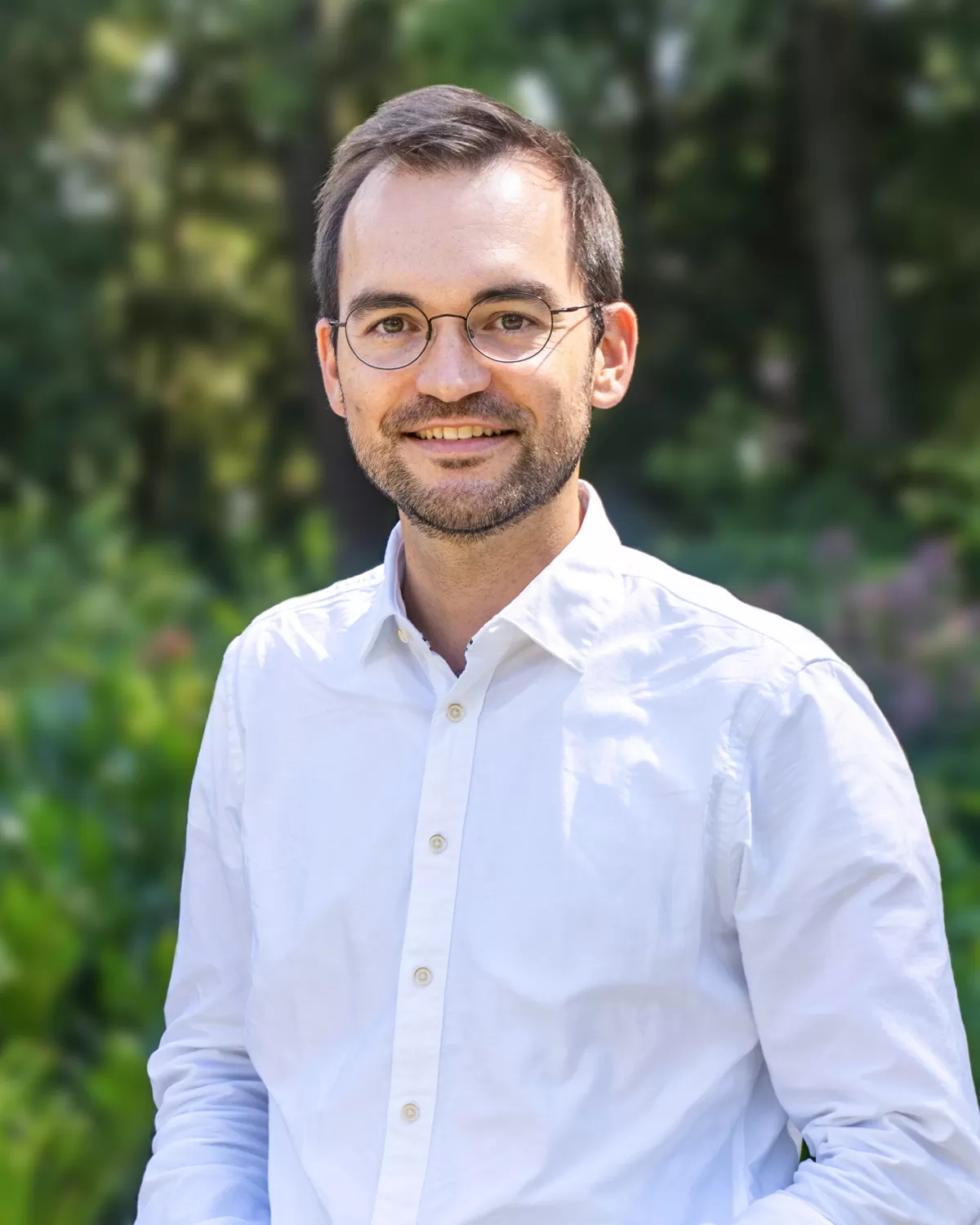
Manuel Linsenmeier
Climate change has huge social and economic consequences – as do the political measures designed to mitigate them. Environmental economist Manuel Linsenmeier from Goethe University Frankfurt is calculating economically viable routes out of the climate crisis.
Manuel Linsenmeier sees the future in data. He combines climate model forecasts with economic figures to gain a better understanding of the social consequences of global warming and identify possible solutions.
Average annual temperatures are set to rise in the future, but so are temperature fluctuations. Like the temperature increase itself, these fluctuations will have consequences for the economy: rising costs for energy and the health system, low planning certainty for the economy, and a worsening investment climate. Linsenmeier has calculated the global impact of these fluctuations in terms of shrinking gross domestic products. “Poorer countries in the tropics and subtropics in particular can expect to bear the highest additional cost burden caused by increasing variability,” he says. Using econometric methods and machine learning, he analyzes huge datasets to identify patterns. You could call him a big-data detective who searches for connections in a sea of numbers.
Linsenmeier has calculated the global impact of these fluctuations in terms of shrinking gross domestic products. “Poorer countries in the tropics and subtropics in particular can expect to bear the highest additional cost burden caused by increasing variability,” he says. Using econometric methods and machine learning, he analyzes huge datasets to identify patterns. You could call him a big-data detective who searches for connections in a sea of numbers.
Often, people say that colder parts of the world will benefit from climate change in future climate scenarios. But that’s not what the data shows.
For instance, Linsenmeier found evidence in data from Eurostat, the statistical office of the European Union, that the annual economic growth rate in the EU could shrink by 0.5 percentage points as a result of climate change, assuming a moderate climate scenario. “Often, people say that colder parts of the world will benefit from climate change in future climate scenarios,” he says. “But that’s not what the data shows. That’s a key political message.” Farming and processing industries in particular will be hard hit, according to Linsenmeier. “The impacts will vary significantly from one region to another, so the adaptation measures we develop will have to be better targeted than in the past.”
A database for global justice
Linsenmeier’s interest in climate and weather data began during his meteorology degree. “In the very first semester I saw that the need for a more accurate understanding of the climate system was less pressing than the need to understand its socioeconomic impacts and possible solutions,” he recalls. For his second degree, he opted for economics, and then wrote his doctoral thesis at the intersection between the two: in environmental economics.
Since then, Linsenmeier has been skillfully navigating the interdisciplinary space between socioeconomics and climate science. He investigates the economic consequences of temperature fluctuations, the significance of weather forecasts for disaster risk reduction, and the international diffusion of climate policies – always on the basis of solid data.
Following periods spent working in London, New York, and Princeton, he has found a new intellectual home at Goethe University Frankfurt in the Center for Critical Computational Studies. The center develops artificial intelligence methods that it uses for critical analysis. Linsenmeier is employing these tools to scrutinize climate and economic data for answers to global justice questions.
We have to understand that we really do have the ability to make a difference. It’s up to us how bad things get.
For example, with rising temperatures and better models, weather forecasts are becoming increasingly important for saving lives in extreme weather events. However, it is precisely those countries most affected by climate change that have less effective weather forecasts. “Few rich countries currently provide infrastructure for global weather forecasting,” Linsenmeier says. “If we want to help the countries in the Global South adapt to climate change, an important step would be to expand financing for weather monitoring and weather forecasts.” To ensure that his data leads to actions, Linsenmeier tries to work with organizations like the International Monetary Fund, the World Bank, and the United Nations, which often base their decision-making on data.
In the future, he plans to calculate the costs of climate change and the adaptation potential as accurately as possible to obtain policy-relevant findings. “I want to make a contribution to a more sustainable and resilient society,” he says. At the same time, he tries to mediate between opposing positions, because meaningful climate policy measures are often blocked by conflicting objectives. For example, if you want to reduce energy consumption and emissions, but cannot afford to place too great a burden on the economy. With its deliberative methods that weigh up competing considerations, environmental economics can help find a happy medium for the common good.
“In my research, I’m making a stand against pessimism – the voice that says we can’t do any more and that everything will be terrible,” says Linsenmeier. Particularly when it comes to avoiding emissions, there are many grounds for optimism, since technologies are developing at pace and many countries are making progress. “If this continues, the world will slash emissions, if only for economic reasons – regardless of who is president of the United States,” says Linsenmeier. However, in the area of adapting to climate change, there is much still to be done: Even in optimistic climate scenarios, Linsenmeier says the global need for measures is huge – but the transformation is still possible. “We have to understand that we really do have the ability to make a difference,” he says. “It’s up to us how bad things get.”
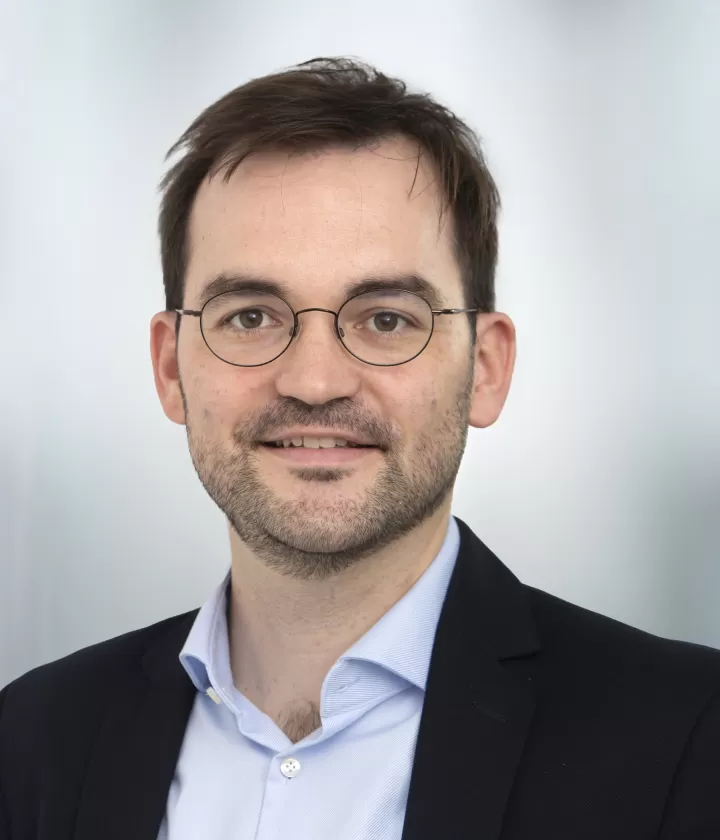
Manuel Linsenmeier is Professor of Environmental Economics at the Center for Critical Computational Studies (C3S) at Goethe University Frankfurt. Previously, he was a postdoc researcher at Columbia University (2022–24) and Princeton University (2024–25). Linsenmeier completed his PhD in environmental economics at the London School of Economics, prior to which he studied meteorology, sustainability, and economics in Hamburg, Leeds, and Berlin. He has been a Fellow of Wübben Stiftung Wissenschaft since 2025.